
Writing
Why Your Writing Sounds Robotic (And How to Fix It in 2026)
Find out why your writing sounds robotic and how to fix it in 2026. Practical tips for students and creators to sound more human—without losing clarity.
January 29, 2026
5 min read
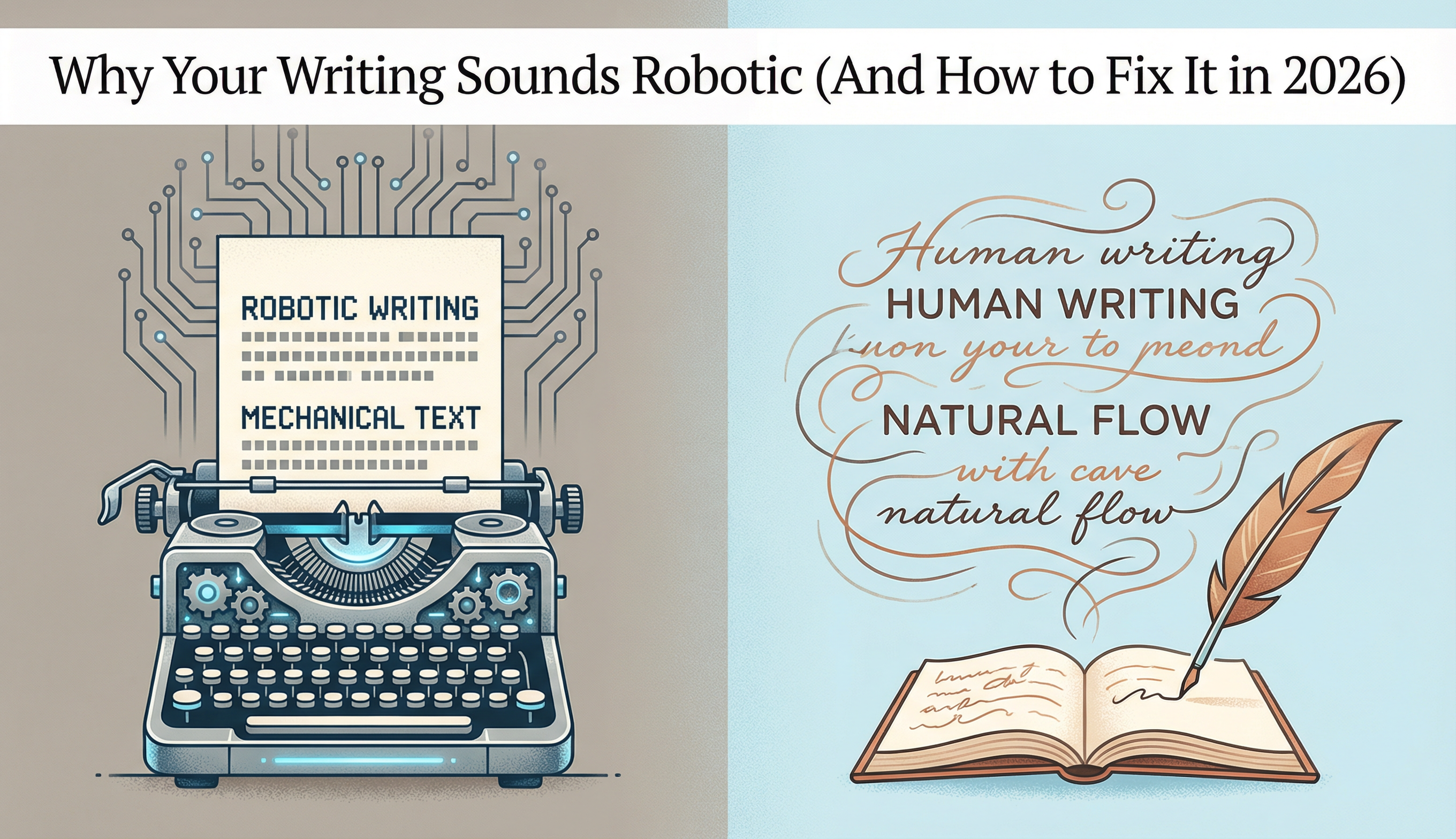
Whether you're a student, a freelancer, or a marketer—here's why your prose feels stiff and how to make it sound like you. For more guides on humanizing AI text and passing AI detection, see our blog.
"It Just Doesn't Sound Like Me"
You've run your draft through Grammarly. The grammar is perfect. The structure is clean. So why does it still read like a manual?
You're not imagining it. Robotic writing has telltale signs: same sentence length, predictable transitions, no personality, and a polish that feels artificial. And in 2026, more people than ever are producing it—often without realizing it—because they're editing AI-generated text or writing under pressure to sound "professional." If you're working with AI drafts, our guide on how AI detection works explains why that polished-but-flat feel gets flagged by tools like Turnitin and GPTZero.
The good news: you can fix it. This guide explains why your writing sounds robotic and gives you concrete ways to make your writing sound more human—without losing clarity or credibility.
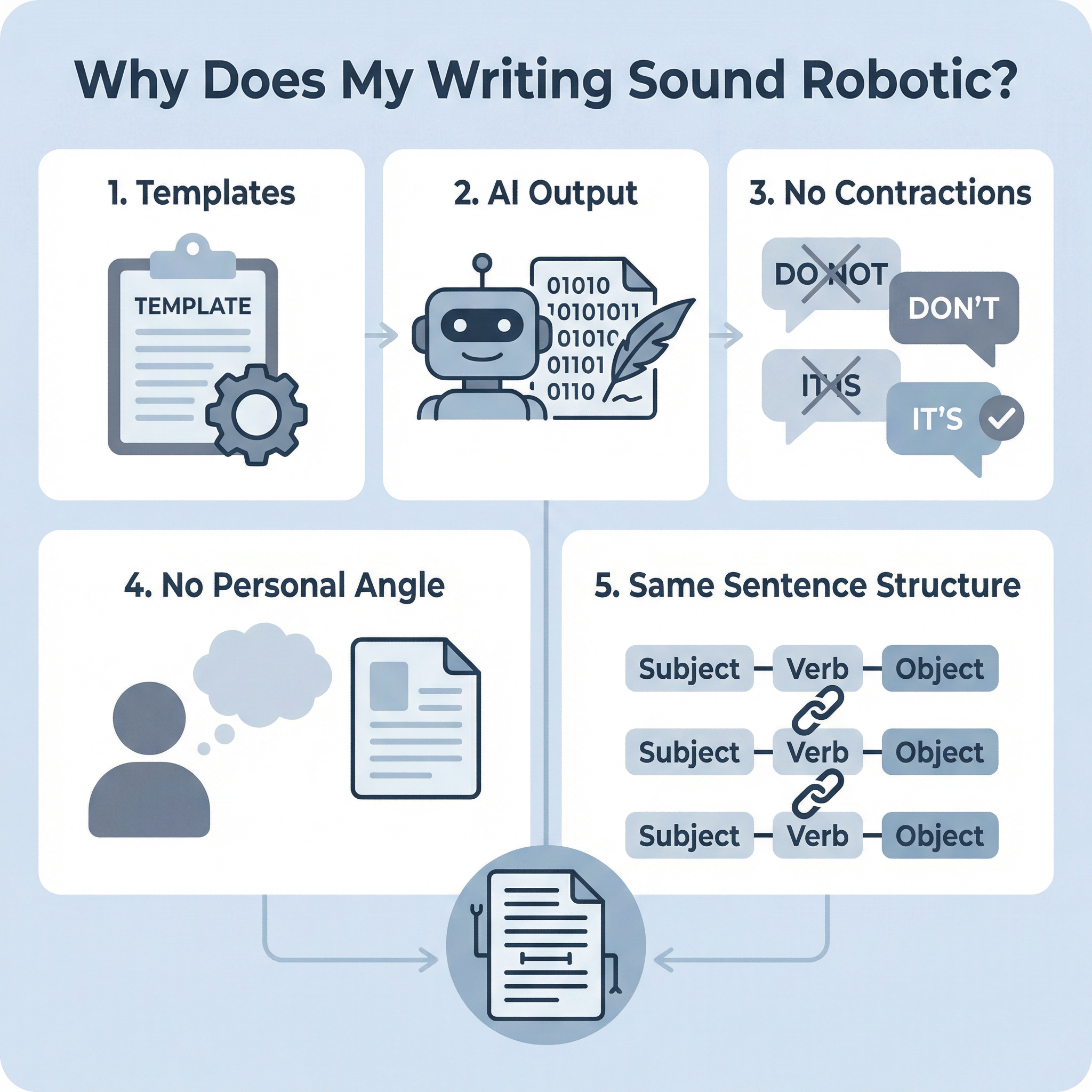
Why Does My Writing Sound Robotic?
A few causes show up again and again.
- Over-Reliance on Templates and Filler Phrases
Templates and stock phrases ("It is important to note that," "In conclusion," "Furthermore") make writing uniform. They're safe, but they strip out voice. The more you lean on them, the more your writing sounds like everyone else's—and like a machine. These are the same kinds of patterns AI detectors look for; cutting them helps your prose and can help it pass AI detection when that matters. More on that in our AI Humanizer Guide.
- Too Much AI Output With Too Little Editing
AI tools are great for structure and ideas. But if you paste, light-edit, and submit, the text keeps AI's rhythm: even sentence length, neutral tone, and repetitive connectors. AI-written text often sounds robotic until a human rewrites it. Editing for clarity isn't enough; you have to change rhythm, tone, and flow. For step-by-step methods, see How to Humanize AI Text and How to Make AI Content Undetectable.
- Avoiding Contractions and Short Sentences
Formal writing doesn't mean stiff. "Do not" instead of "don't," and long sentence after long sentence, make prose feel distant. Real speech—and readable writing—mixes short and long, and uses contractions when they sound natural.
- No Personal Angle or Specifics
Generic claims ("many people believe," "research shows") feel impersonal. Robotic writing stays at a high level of abstraction. Human writing adds a concrete example, a specific detail, or a clear point of view.
- Same Sentence Structure Over and Over
Subject–verb–object, subject–verb–object. When every sentence follows the same pattern, the reader's brain goes on autopilot. Variation in length and structure keeps attention and makes the writer sound like a person, not a report generator. For more on why AI text reads this way and how to fix it, see AI vs Human Writing.
How to Make Your Writing Sound More Human
Vary Your Sentence Length and Structure
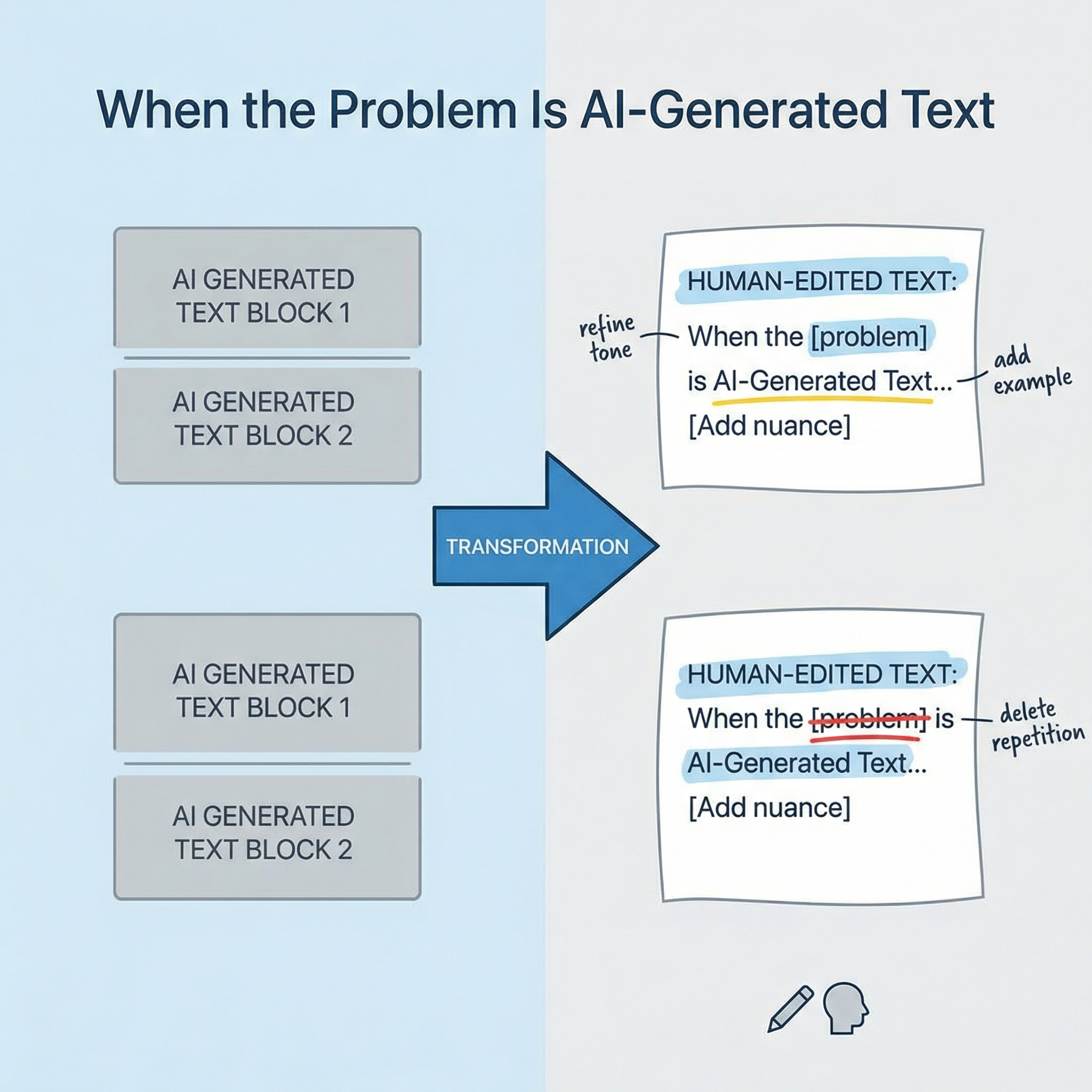
Short sentences punch. Long sentences build. Mix them. Start a paragraph with a short line. Use a mid-length one, then a longer explanation. Read the paragraph aloud; if it drones, break or combine sentences until it has a natural rhythm.
Use Contractions Where You'd Say Them
"If you do not revise, your writing will not improve" → "If you don't revise, your writing won't improve." Use contractions in most blog posts, emails, and essays unless the style guide explicitly forbids them. It instantly makes tone warmer.
Replace Filler Phrases With Clear, Direct Language
Cut or replace: "It is important to note that" → "Note that" or just state the point. "In order to" → "To." "Due to the fact that" → "Because." "At this point in time" → "Now" or "Currently."
Fewer words and fewer clichés make the writer sound more confident and less robotic.
Add One Concrete Detail or Example Per Section
One specific fact, number, or example per section grounds the reader. Instead of "Many students struggle with time management," try "Last semester, 40% of first-years in our survey said they pulled at least one all-nighter." Specifics make the writer sound like a real person who's done the work.
Read It Aloud and Fix What Sounds Off
If it's hard to say in one breath or sounds like a textbook, it will read that way. Reading aloud exposes stiff phrasing, run-ons, and monotonous rhythm. Fix those spots and your writing will sound more natural.
Let Your Opinion Show (When Appropriate)
Neutral, on-the-fence language can feel robotic. In essays and content where it's appropriate, state a clear position: "I recommend…," "The better approach is…," "This matters because…." A clear point of view makes the writer sound human.
When the Problem Is AI-Generated Text
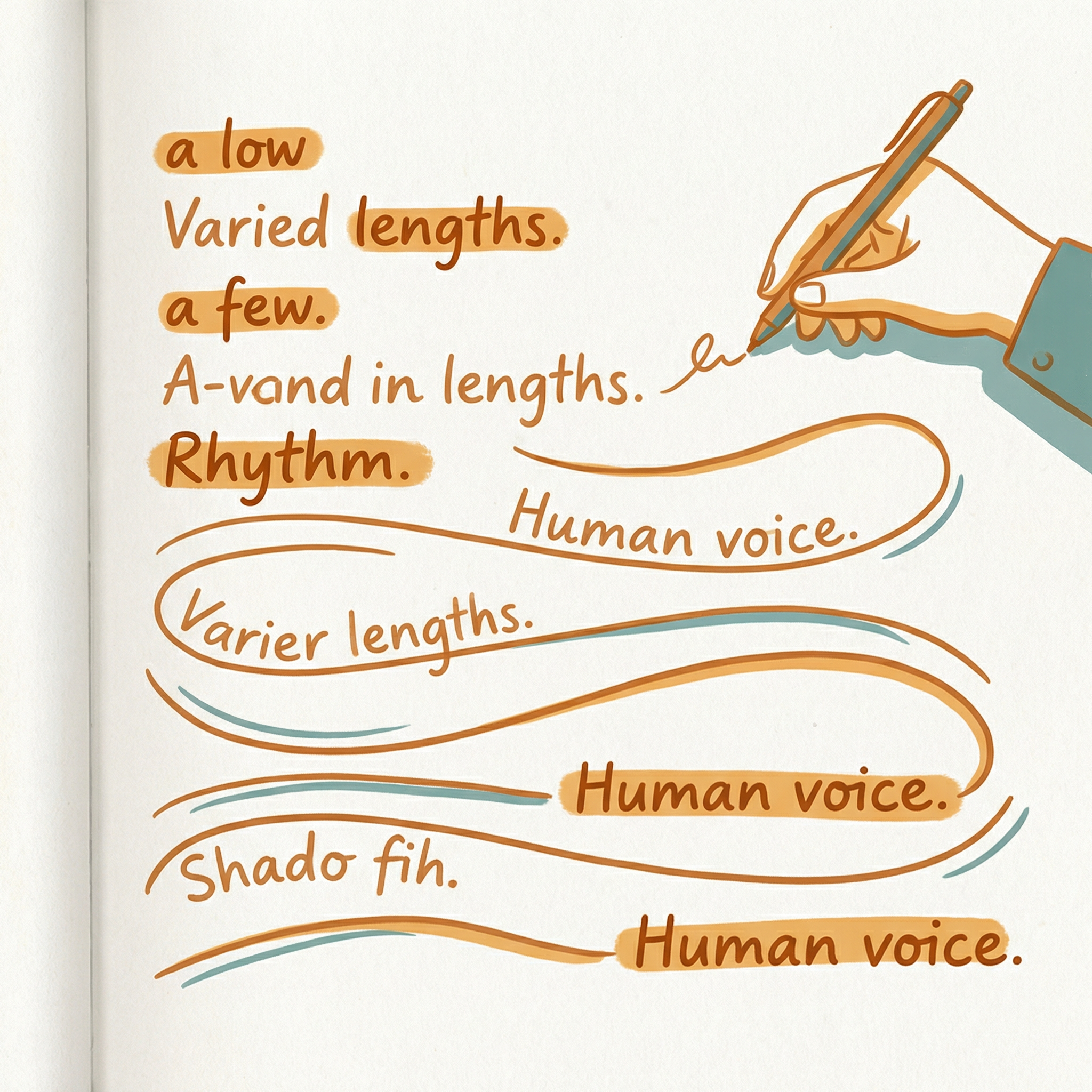
If the draft started as AI output, editing for grammar and flow often isn't enough. The underlying patterns—sentence rhythm, word choice, transitions—still read as machine-made. In that case you have two paths:
Manual rewrite: Change sentence structure, swap in your own phrases, add examples and tone. Time-consuming but very effective. Our Complete Guide to Better Rewriting has proven techniques.
Structural humanization: Use a tool that rewrites at the sentence and paragraph level (not just synonym swapping) so the text keeps your meaning but gains natural variation and flow. That's what tools like RealTouch AI are built for: preserving your message while making the writing sound like a human wrote it—and helping it pass AI detection when that's a requirement. You can try our AI humanizer free here. For comparisons, see Best AI Humanizers and Why AI Humanizers Fail—and what actually works.
Either way, the goal is the same: fix robotic writing by changing how the text is built, not just how it's polished. Students submitting to Turnitin or GPTZero can go deeper in our Bypass Turnitin guide and Bypass GPTZero guide; marketers and creators can check Bypass Originality.ai.
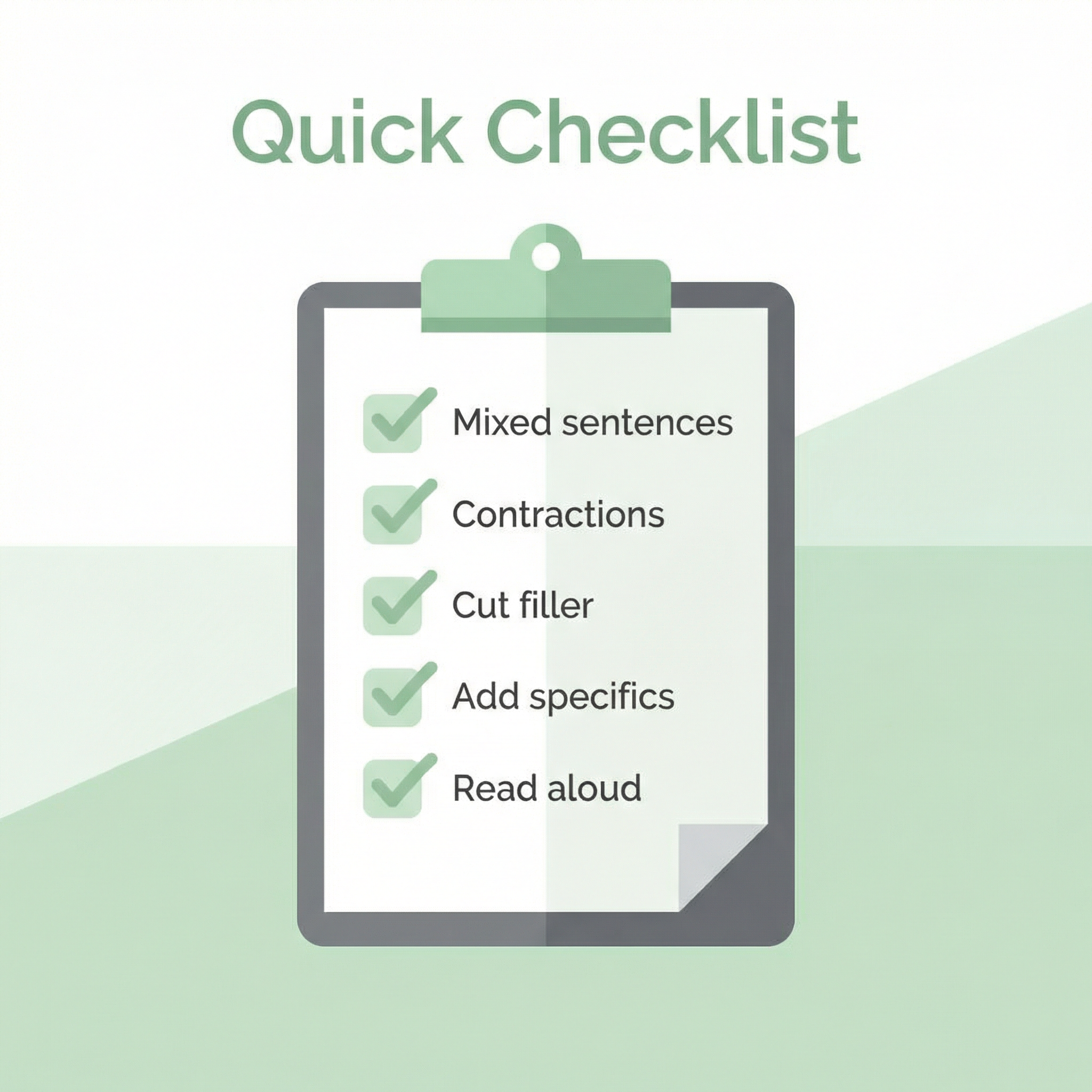
Quick Checklist: Is My Writing Sounding More Human?
Mixed short and long sentences Contractions used where natural Filler phrases cut or replaced At least one concrete detail or example in key sections Read aloud and adjusted anything that sounded stiff Clear point of view where the assignment allows it
Key Takeaways
Robotic writing usually comes from uniform structure, filler phrases, and AI output that wasn't fully rewritten. Fix it by varying sentence length, using contractions, cutting filler, adding specifics, and reading aloud. When the source is AI, add a structural humanization step (manual rewrite or a tool like RealTouch AI) so the result sounds like you. Your words should sound like you—clear, confident, and human.
The Bottom Line
Robotic writing usually comes from rigid structure, AI output that wasn't fully rewritten, and a lack of rhythm and personality. You fix it by varying sentences, using contractions, cutting filler, adding specifics, and reading aloud. When the source is AI, consider a structural humanization step so the result truly sounds like you.
Your words should sound like you—clear, confident, and human. Once you know why it sounds robotic, you can fix it and keep that standard for every assignment or piece of content.
Want your AI-assisted drafts to sound more natural and pass AI detection? RealTouch AI rewrites at the structural level so your message stays intact while the writing reads like you. Try it free—or explore our guides for students, our full humanizer guide, and pricing. Questions? Visit our Help Center.